Safety is mostly discipline, not “special equipment”
Most wall printing safety issues are simple and preventable: poor jobsite control, messy cables, unstable power setup, and rushed workflow decisions. This guide is a practical operator SOP mindset — not a replacement for local regulations or product-specific instructions.
CTA: Ask for our operator safety SOP with your quote. Quick form: Get a quote
Keywords covered
- wall printer safety / UV wall printer safety
- indoor wall printing safety / wall printing ventilation
- wall printer PPE / wall printing jobsite setup
What “safe wall printing” means
“Safe wall printing” is not one magic rule — it’s a set of repeatable habits:
- Control the jobsiteDefine a print zone and keep non-staff away from it.
- Keep the area clean and stableReduce dust, slips, and accidental bumps.
- Prevent trips and impactsCable routing and tidy tool placement are the real safety wins.
- Handle ink responsiblyFollow supplier guidance and avoid contamination or spills.
- Use appropriate PPE when neededRequirements vary by environment and local rules.
Safety is a workflow. If your team follows the same routine every job, incidents drop and trust rises.
Workflow discipline reference: /wall-printing-workflow/
Ventilation and indoor checklist
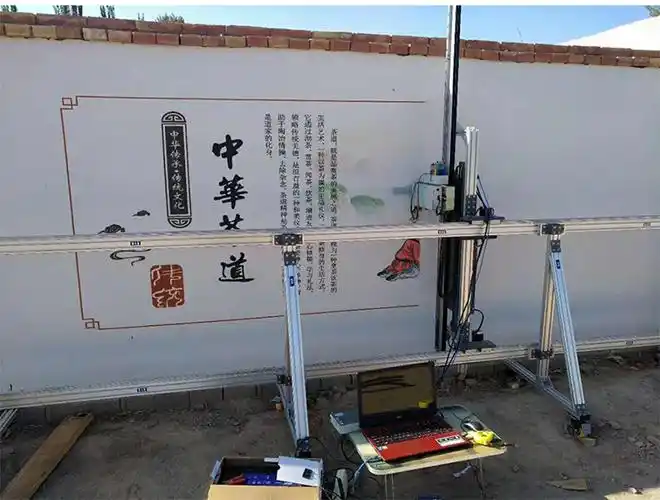
Indoor printing often happens in homes, schools, clinics, offices, and hotels. Your goal is not to “guess” — it’s to plan a controlled environment and follow supplier guidance for materials.
Practical indoor ventilation checklist
- Keep airflow where possible (doors/windows, appropriate scheduling)
- Keep non-staff away from the print zone during printing and cleanup
- Avoid sealed rooms without a ventilation plan
- Follow ink handling guidance from your supplier
- Schedule sensitive spaces off-hours (schools/clinics/hotels) when possible
The most important indoor safety habit is site control: if you can’t keep people away from the print zone, pause and reset. A controlled jobsite is safer and produces better prints.
Protecting client spaces (clean workflow)
Clients judge professionalism by cleanliness. A tidy jobsite prevents accidents and increases trust — and it also makes your workflow faster because you’re not constantly “searching for tools” or untangling cables.
Bring a protection kit
Floor covers, corner protection, tape, bags, wipes, gloves (where appropriate).
Keep tools organized
A tidy tool layout reduces spills, drops, and rushed mistakes.
Control the boundaries
Mark the print zone and keep foot traffic away from the base and cables.
Internal link: /wall-printing-workflow/
Ink handling and storage basics
Most ink “safety” comes down to correct storage, clean handling, and avoiding contamination. Good habits reduce waste, keep output consistent, and prevent unnecessary exposure or mess.
- Store correctlyMaintain appropriate temperature and avoid direct sunlight.
- Seal properlyKeep containers closed and clean after use.
- Follow daily/weekly routinesConsistent maintenance prevents leaks, clogs, and rework.
- Avoid contaminationKeep work surfaces clean; don’t mix dirty tools with clean materials.
Support resources and SOP guidance: /support/
Electrical and cable safety
Most jobsite incidents are not “machine failures.” They are simple: tripping over cables, unstable extension setups, or disturbing the base mid-print. Build a routine that prevents the common errors.
Jobsite electrical safety habits
- Route cables away from foot traffic and avoid crossing walkways
- Keep extension setups stable and rated appropriately for the jobsite
- Mark a boundary around the print zone to protect the base from bumps
- Avoid moving equipment while powered — stop and reset instead
- Plan for interruptions so operators don’t make panic decisions mid-job
Printava recommendation: power/field considerations and SOP mindset
When you write a safety SOP, include the real-world details operators face. Print jobs happen on client sites, not in a perfect factory. That means you must plan for cable routing, stable power setups, and controlled boundaries every time.
Workflow features can indirectly improve safety by reducing rushed decisions:
- Laser positioning reduces repeated repositioning (less movement, fewer “bump” opportunities)
- Resume printing / data recovery reduces panic after interruptions
- Checklists and nozzle inspection routines reduce “guessing” mid-job
Explore models: /wall-printer/
Request SOP guidance: /get-quote/
Wall Printer Quote Checklist Send These 7 Items
- Country + city
- Typical wall height range
- Typical job size
- Main wall surfaces
- Indoor only or indoor + outdoor
- Dark walls needed?
- Power standard
CTA: Ask for our operator safety SOP with your quote.
Quick form: Get a quote