Commercial clients don’t buy wall printing because it’s “cool.” They buy it because it solves a business problem: make spaces look better, faster, with consistent branding—often under tight deadlines and limited work windows. If you’re researching a commercial wall printer, you’re likely aiming for higher-ticket projects where speed, consistency, and durability matter more than a spec sheet.
This guide shows how commercial buyers think, what projects pay well, and how to structure quotes and packages so you don’t lose money on prep, access constraints, or rework.
1. Commercial wall printer: what commercial buyers actually want
Commercial decision-makers (store owners, facility managers, franchisors, marketing teams) typically care about:
1.1 Timeline reliability
They often need work done:
- overnight,
- before opening,
- or during low-traffic hours.
If you can’t deliver reliably within their schedule window, you’re not “commercial-ready,” even if your print quality is high.
1.2 Consistency across multiple zones
Commercial spaces rarely have just one wall. They have:
- entry walls,
- checkout areas,
- corridors,
- photo spots,
- and sometimes multiple locations.
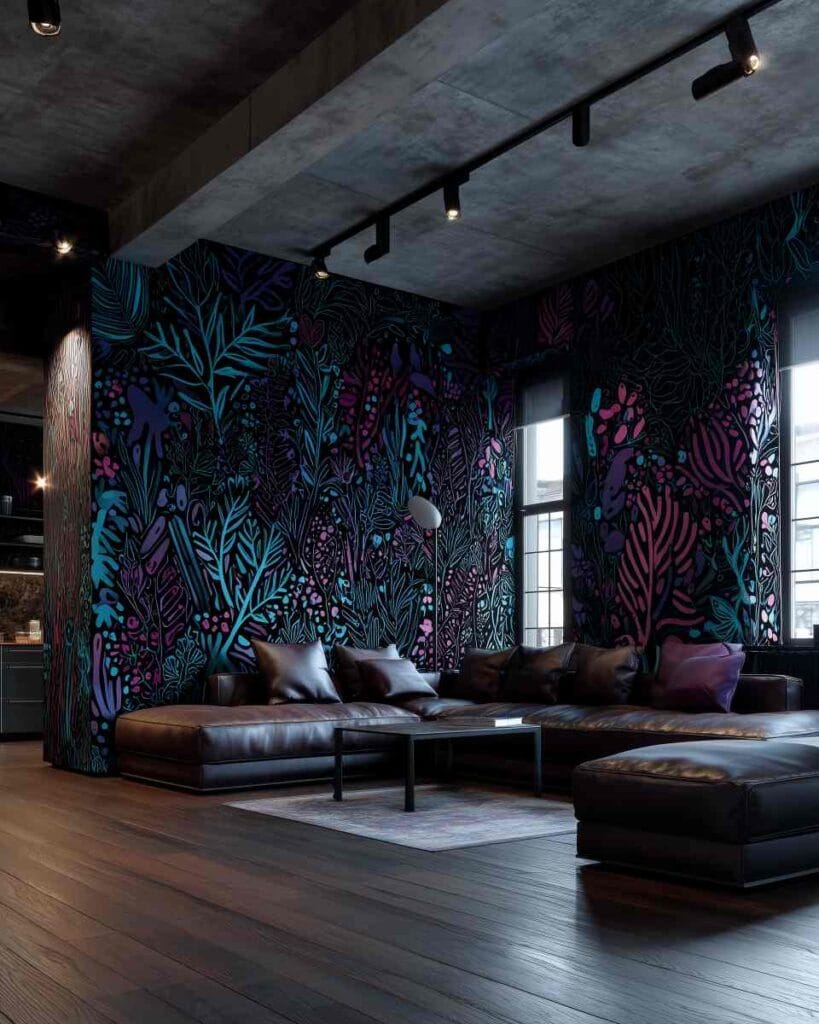
They want consistent color, alignment, and brand style across zones. Your workflow matters as much as your design.
1.3 Durability under cleaning and traffic
Commercial walls get touched, cleaned, scuffed, and exposed to varying humidity and lighting. Buyers want clear expectations:
- what cleaning is safe,
- what lifespan is realistic,
- and whether a topcoat is needed.
1.4 Minimal disruption
Commercial clients want you to:
- protect floors and fixtures,
- keep the site clean,
- finish fast,
- and avoid blocking operations.
Practical takeaway: In commercial work, your “product” is a repeatable delivery system, not just a printer.
2. Best commercial use cases (where budgets are real)
Some commercial project types reliably have budgets because they support revenue, branding, and customer experience.
2.1 Retail brand walls and seasonal refreshes
Retail uses wall graphics to:
- improve store “photo appeal,”
- highlight campaigns,
- and create brand consistency.
These projects often repeat every season, making them ideal for long-term accounts.
2.2 Office reception and identity walls
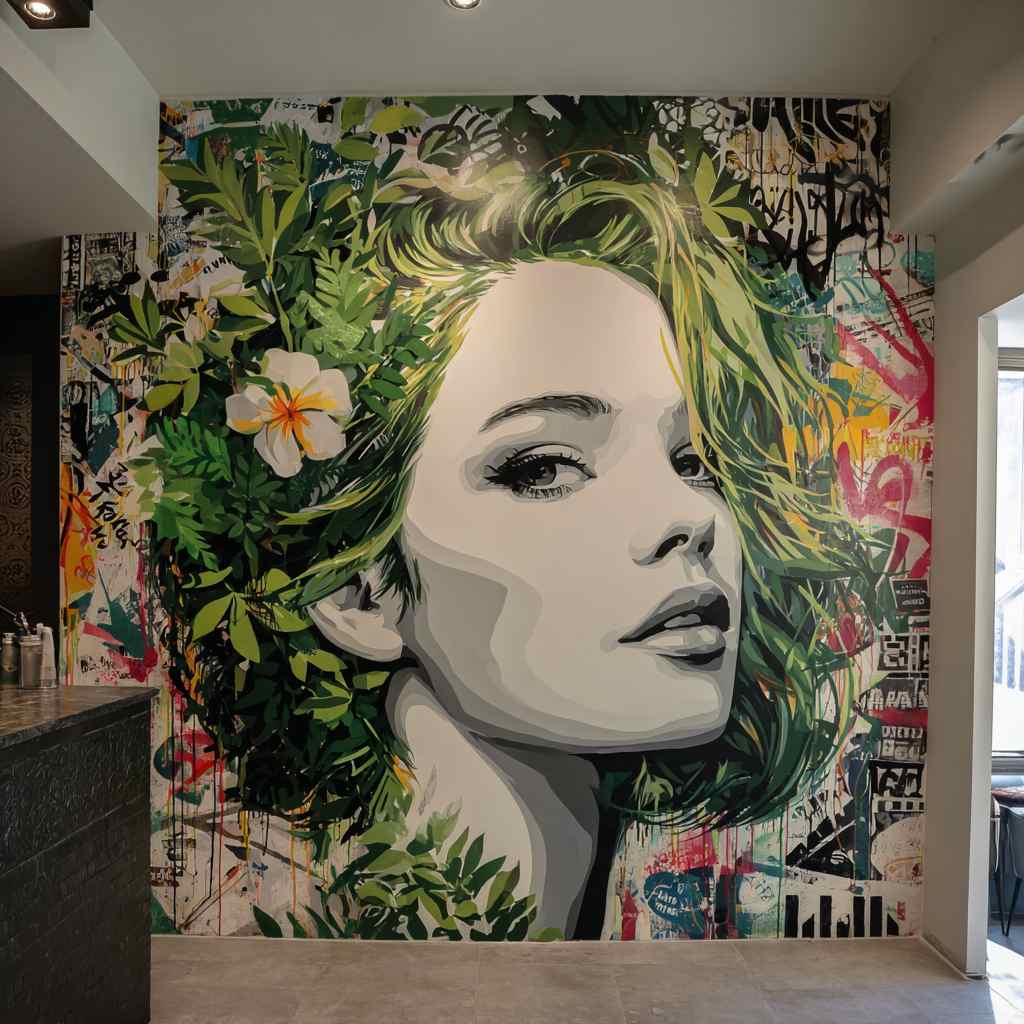
Offices want:
- logo walls,
- mission statements,
- patterns and brand motifs.
Typography and alignment matter. A clean, professional finish can justify premium pricing.
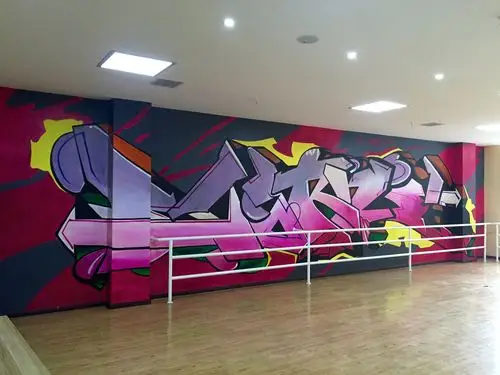
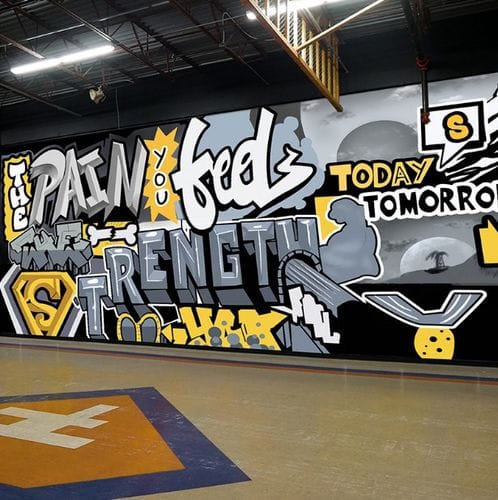
2.3 Gyms, studios, and wellness spaces
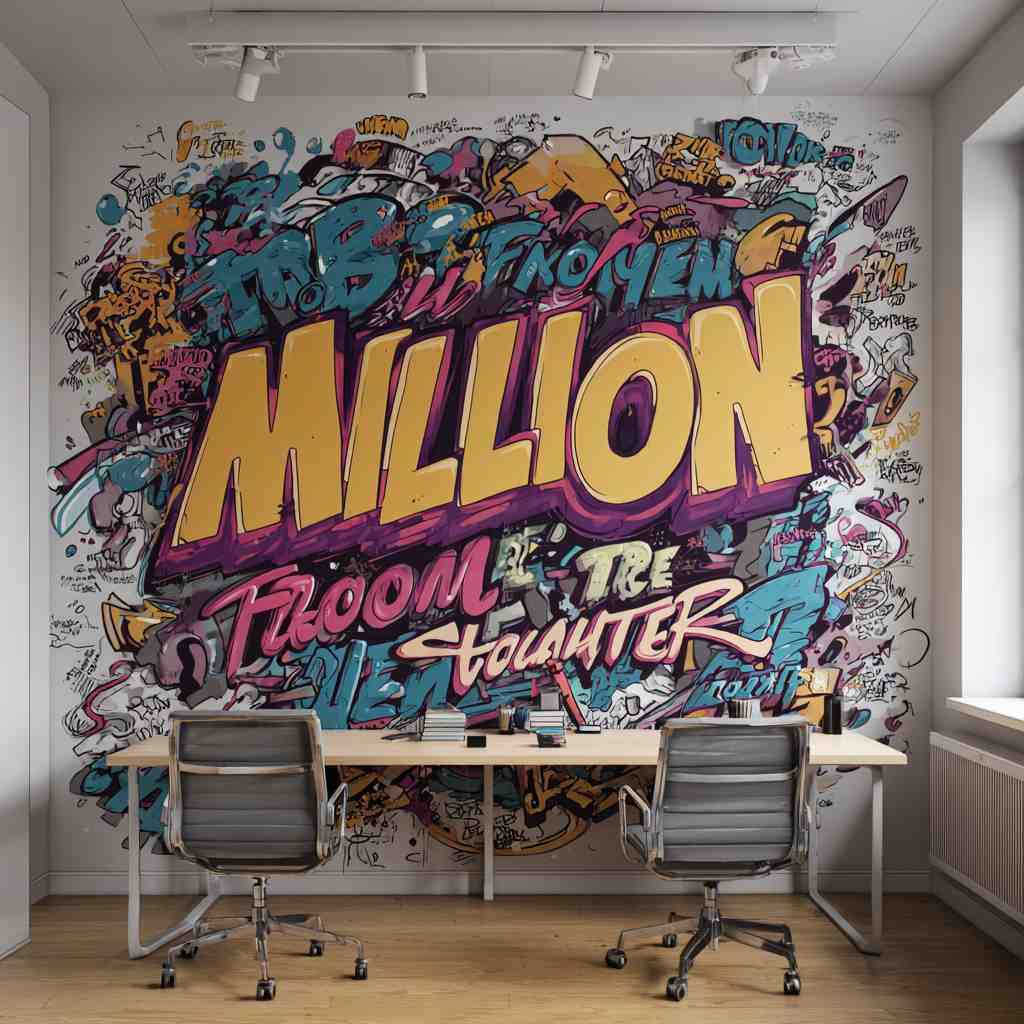
These spaces love:
- high-impact motivational walls,
- large-scale graphics,
- and social-media-friendly zones.
Surfaces may be textured or repainted often. Prep + test patch discipline is what prevents failures.
2.4 Hospitality: hotels, corridors, amenities
Hospitality needs:
- consistency across floors and corridors,
- durable finishes,
- and controlled disruption (quiet hours).
Work windows can be strict, so workflow speed matters.
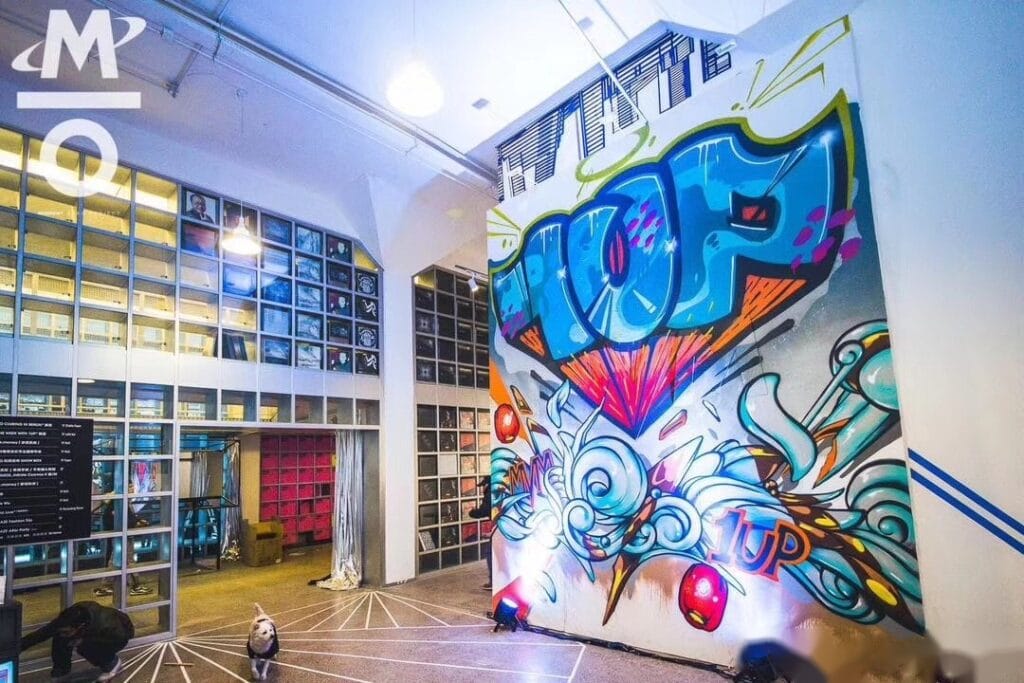
2.5 Events and pop-ups
Events pay for:
- speed,
- visual impact,
- and deadlines.
Your ability to execute reliably “under pressure” becomes your selling point.
3. Durability & cleaning expectations (set this before you quote)
Commercial durability is not one universal promise. It depends on:
- surface type and condition (smooth paint vs textured vs porous),
- prep quality,
- environmental conditions,
- and cleaning practices.
3.1 Define “cleaning rules” in writing
Before quoting, ask:
- Will the wall be cleaned daily? weekly? rarely?
- What cleaning chemicals are used?
- Are there high-touch zones (kids, gyms, corridors)?
Then set realistic guidance:
- “water-only” vs “mild detergent OK,”
- “avoid abrasive sponges,”
- “test small area first.”
3.2 Decide if a protective topcoat is required
A topcoat may be relevant when:
- cleaning is frequent,
- traffic is heavy,
- or the wall surface is fragile.
Don’t sell durability as a vague claim. Make it part of the scope.
3.3 The easiest way to prevent disputes
Include a short “durability statement” in your quote:
- expected lifespan range,
- cleaning limits,
- and surface responsibility (e.g., failing paint underneath is not a print defect).
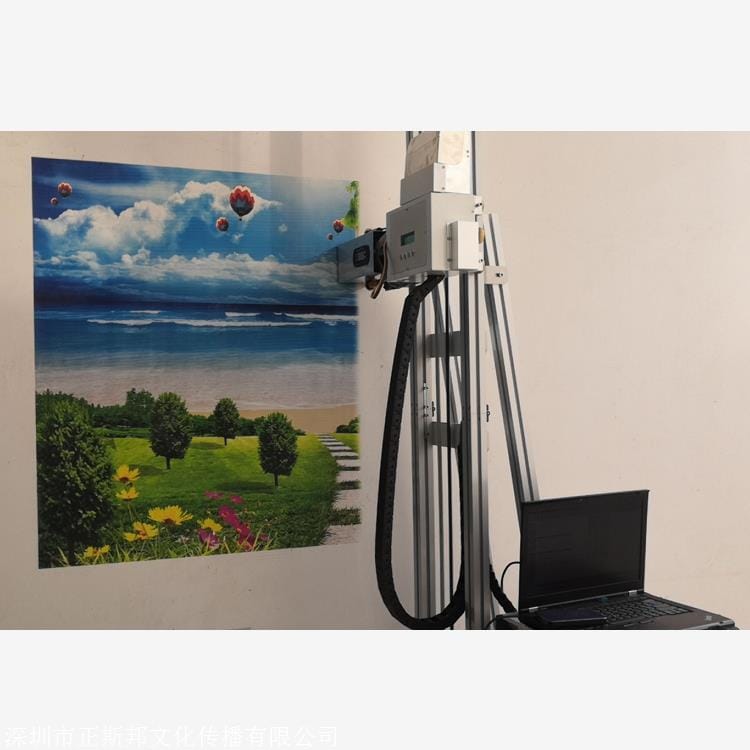
4.Packaging your offer (wall-only vs wall+floor bundles)
Commercial clients buy outcomes. Packaging makes decision-making easier and increases average order value.
4.1 Wall-only package (fast, clean, high margin)
Best for:
- logo walls,
- backdrops,
- single-zone upgrades.
Define what’s included:
- surface inspection,
- basic prep assumptions,
- test patch,
- printing + final inspection.
4.2 Wall + floor bundle (higher ticket)
Best for:
- wayfinding,
- zone branding,
- complete space upgrades.
Bundles work because the client gets one vendor, one schedule, and a unified visual result.
Strong internal link (insert after this paragraph): If you’re ready to purchase equipment for bundles, see
/wall-printer-for-sale/ (anchor: wall printer for sale options).4.3 Multi-zone commercial packages
A simple structure:
- Starter: 1 feature wall
- Standard: 2–3 zones (same site)
- Premium: multi-zone + floor wayfinding
Packages reduce “custom quoting chaos” and help sales conversations.
5. Production workflow (speed + consistency on-site)
Commercial delivery depends on a workflow that prevents rework.
5.1 Site survey basics (don’t skip)
Confirm:
- wall sizes and obstacles,
- surface texture and paint condition,
- access constraints (stairs/elevators, furniture),
- power availability and safe setup area.
5.2 Test patch as a standard step
A test patch validates:
- adhesion,
- color under real lighting,
- and surface texture impact.
In commercial work, this reduces risk more than any spec sheet claim.
5.3 Consistency tricks for multi-zone projects
- use a consistent start reference per zone,
- document settings and calibration outcomes,
- keep a simple “zone checklist” for repeatability.
Internal link (insert here): For a step-by-step process page, link to
/wall-printing-workflow/ (anchor: wall printing workflow).6. Quote checklist (copy/paste for commercial projects)
To get a comparable quote (or to quote clients accurately), standardize inputs.
6.1 Copy/paste commercial quote intake
- Location (Country, City) + site type (retail/office/gym/hotel)
- Zone list: each wall width × height + photos
- Surface type per zone (smooth paint / textured / brick / tile / etc.)
- Work-hour restrictions (night work / weekends / quiet hours)
- Access constraints (stairs, elevators, furniture, narrow corridors)
- Durability/cleaning expectations (frequency + chemicals)
- Deadline date and allowed work windows
- Dark walls needed? (white ink workflow yes/no)
- File status: ready files vs need design help
Strong internal link (place right after checklist): Ready to buy equipment and need a clear configuration quote? Go to
/Contact-us/ (anchor: request a configuration quote).7. Buying checklist (if you’re purchasing equipment)
If you’re buying a commercial wall printer, don’t evaluate only price. Evaluate commercial readiness.
7.1 “Commercial-ready” proof checklist
- live demo showing setup + calibration + printing
- close-ups of gradients, thin lines, small text
- pause/resume seam proof
- realistic support response time (hours)
- spare parts plan based on monthly workload
- crating photos + packed size/weight
7.2 Compare channels without keyword cannibalization
If you’re deciding channels (dealer vs factory-direct), use the informational page:
/where-to-buy-a-wall-printer/(anchor: where to buy a wall printer)
And keep the transactional decision on:
/wall-printer-for-sale/(anchor: wall printer for sale options)
8.Practical note: where Printava fits (low-hype, workflow-first)
Commercial work rewards predictability. In real deployments, the value is often in how well the configuration matches your job profile (typical wall heights, surfaces, dark-wall needs, and how frequently you print on-site). Printava typically leans into workflow clarity—setup guidance, maintenance SOP, and a starter spare-parts plan—so teams can reduce rework and keep schedules reliable. That’s especially helpful for night work windows where you don’t have time for trial-and-error.
FAQ
What’s the biggest risk in commercial wall printing?
Underestimating surface prep, access constraints, and schedule restrictions—leading to delays or rework.
Do commercial clients care more about speed or quality?
They care about both, but they’ll pay extra for predictable delivery and minimal disruption.
Should I bundle wall + floor?
If your client type values complete space branding (retail, gyms, offices), bundles often increase ticket size and win deals faster.