
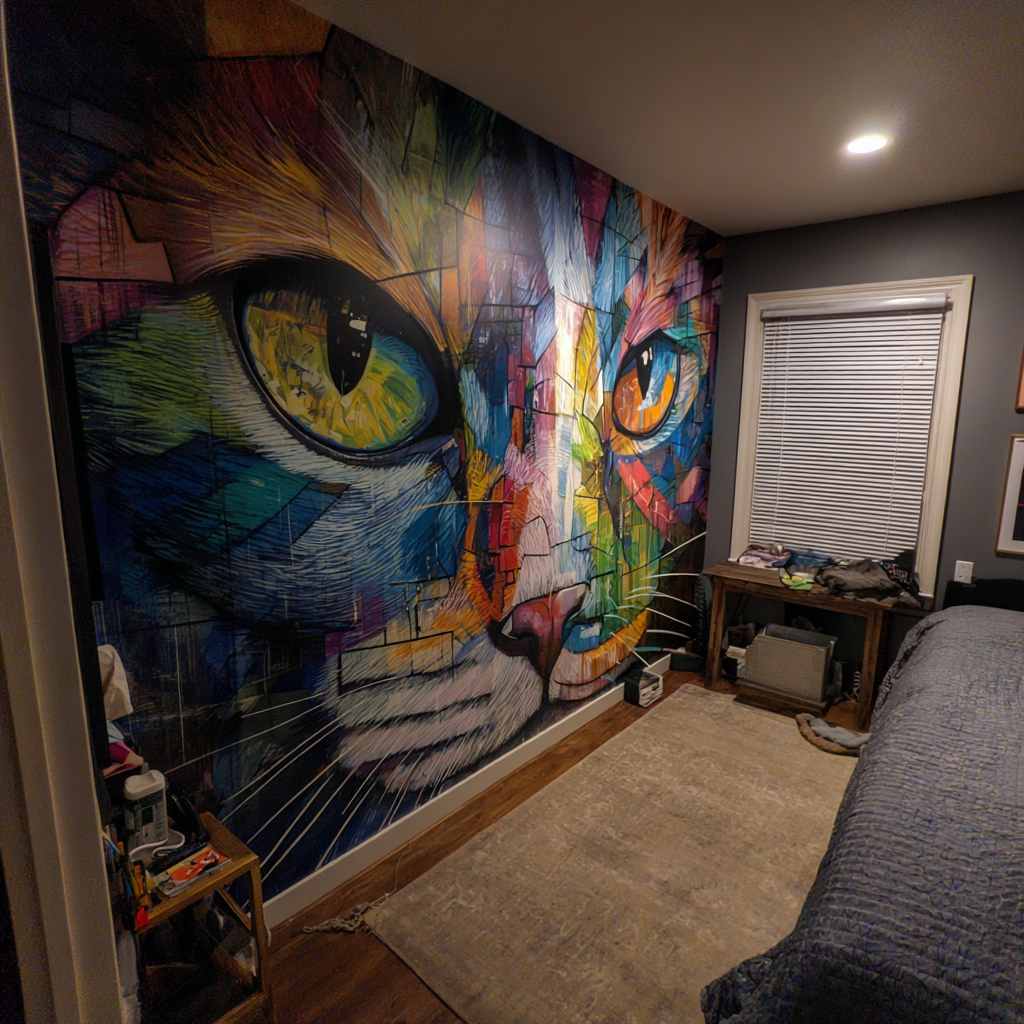
A residential wall printer is often used for home murals—feature walls, kids rooms, nurseries, and custom patterns. Residential projects are different from commercial jobs because clients care just as much about the experience as the final result: cleanliness, minimal disruption, and clear expectations.
This guide is designed for:
- homeowners exploring wall mural printing,
- and operators planning to deliver residential murals professionally.
1. Residential wall printer: what homeowners care about
Homeowners usually ask questions that commercial clients rarely ask:
1.1 “Will it smell? Is it safe?”
They care about:
- odor level,
- ventilation needs,
- time to finish,
- and whether it’s safe for kids/pets.
You don’t need hype. You need a clean process and clear guidance.
1.2 “Will you damage my wall?”
They want to know:
- what prep is required,
- whether the paint condition matters,
- and what happens if the wall is textured or patched.
1.3 “Can it be cleaned?”
Residential walls get touched. Kids rooms especially need realistic cleaning rules.
1.4 “How messy is the process?”
Residential success often depends on:
- protecting floors,
- controlling dust,
- and leaving the space clean when you leave.
Bottom line: Residential clients buy confidence. Your workflow is part of the product.
2. Best rooms & design choices (what works in real homes)
Some spaces convert better and create better final results.
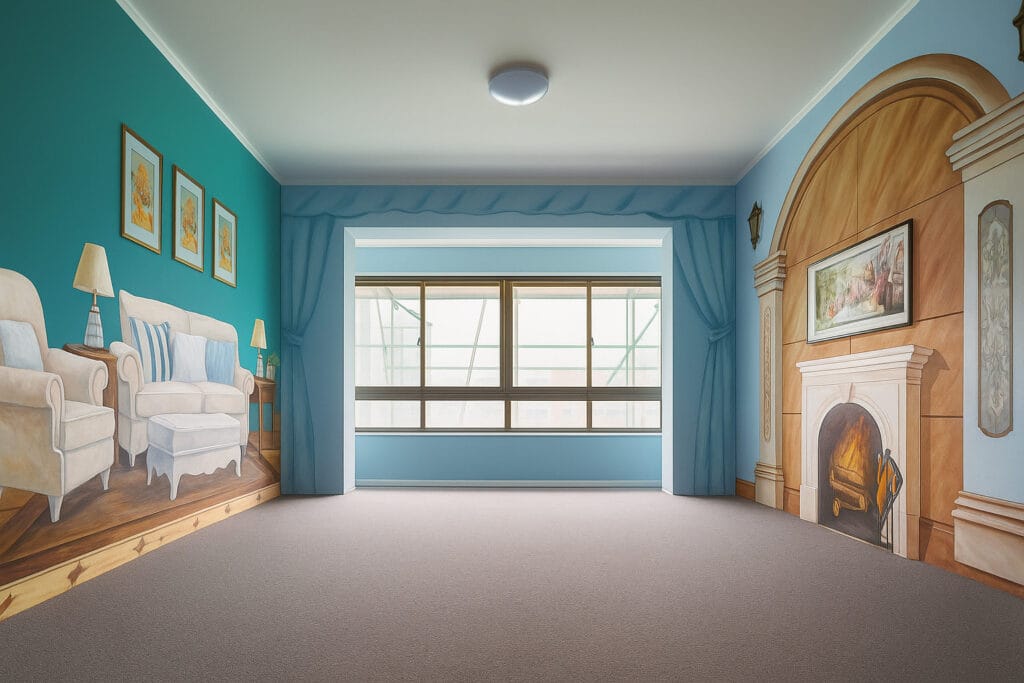
2.1 Living room feature walls
Best for:
- large murals,
- subtle patterns,
- “statement walls.”
Design tip: moderate contrast and strong composition read well under mixed lighting.
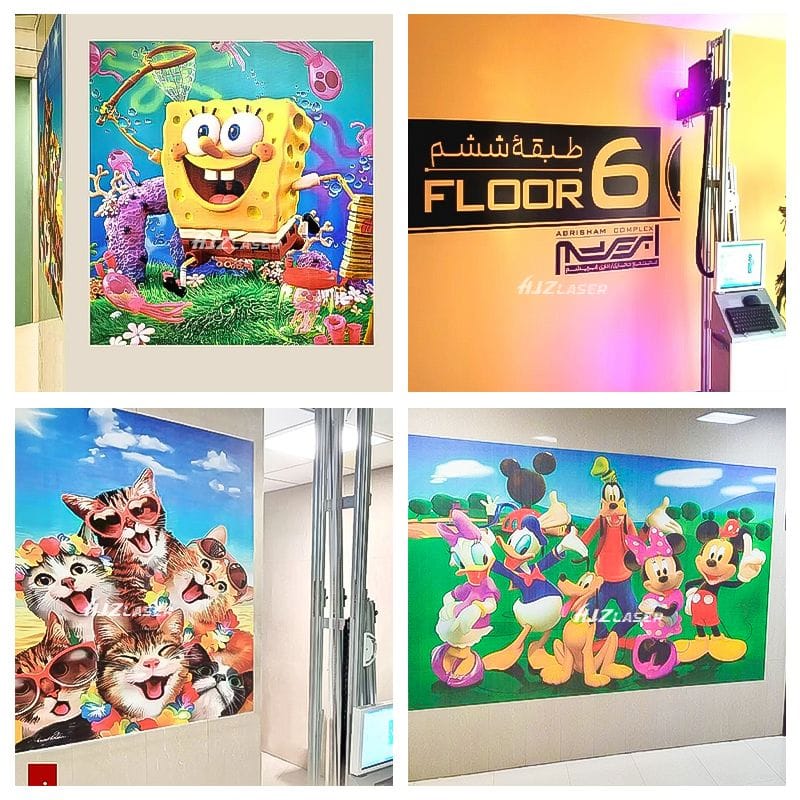
2.2 Kids rooms and nurseries
Common choices:
- themed murals (space, animals, nature),
- soft patterns,
- personalized name art.
Practical tip: avoid ultra-thin lines on textured walls. Texture can distort fine detail.

2.3 Bedrooms
Good for:
- minimal patterns,
- calming landscapes,
- accent walls behind beds.
2.4 Entry walls
A strong entry wall creates instant “wow,” especially for modern homes.
Insert internal link (after this section):
For a client-friendly overview of mural projects, link to
/wall-mural-printing/ (anchor: wall mural printing guide).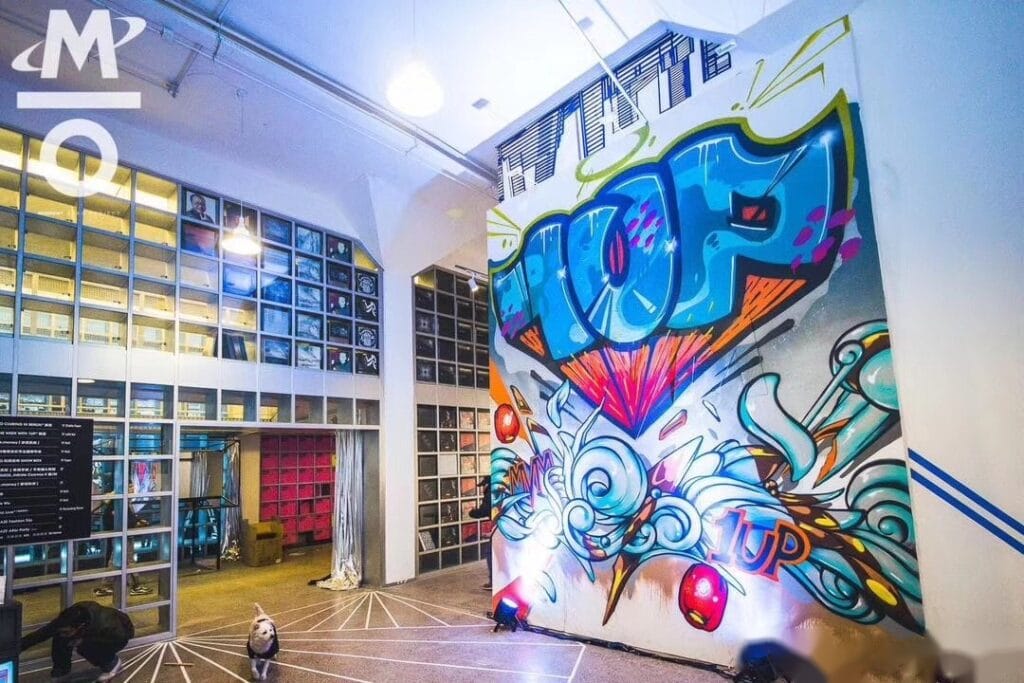
3. Surface prep in residential settings (texture, patches, dust)
Residential walls are rarely perfect. Common realities:
- textured paint,
- uneven patches from repairs,
- dust in corners and baseboards,
- glossy paint in some rooms, matte in others,
- recently repainted walls that may not be fully cured.
3.1 The minimum prep checklist
- inspect the surface under good lighting,
- clean dust and oils (especially in kitchens),
- confirm paint condition (peeling paint is a big risk),
- protect floors and furniture,
- and run a test patch.
3.2 Texture reality (set expectations early)
Textured walls can:
- reduce edge sharpness,
- create inconsistent color appearance,
- and increase the chance of visible defects in fine detail.
The solution is not “pretend it’s fine.” The solution is:
- choose designs that suit texture,
- or recommend surface smoothing if the homeowner wants high-detail art.
3.3 Test patch is non-negotiable
A test patch verifies:
- adhesion,
- color under room lighting,
- and surface texture impact.
It also builds trust because the homeowner sees the process before you commit to the full wall.
4. Clean workflow & disruption control (how pros operate)
Residential clients judge professionalism by cleanliness and communication.
4.1 How to keep the process clean
- cover floors and nearby furniture,
- keep tools organized,
- keep the working area contained,
- minimize movement and “dragging” across rooms.
4.2 Communication that prevents complaints
Before starting:
- explain the steps,
- show where you’ll place equipment,
- explain how long each stage takes,
- and confirm the homeowner’s priorities (speed vs perfection vs minimal disruption).
4.3 Scheduling considerations
Residential projects often work best when:
- the homeowner can be present for sign-off,
- the home is not overly crowded (moving furniture takes time),
- and there’s enough ventilation if needed.
Internal link suggestion (insert here):
For a process-focused explanation, link to
/wall-printing-workflow/ (anchor: step-by-step wall printing workflow).5. Durability & cleaning rules (set expectations)
Homeowners want the mural to last, but “lasting” depends on behavior and surface condition.
5.1 Simple cleaning guidance (most homes)
- avoid abrasive sponges,
- start with water-only,
- test any cleaner in a small hidden area first,
- avoid scrubbing high-detail areas aggressively.
5.2 High-touch zones (kids rooms)
Kids touch walls. If the homeowner expects frequent cleaning:
- discuss whether a protective layer or a different finish is appropriate,
- and set realistic expectations about wear and tear.
5.3 Common durability misunderstandings
- “Waterproof” is not a useful promise without conditions.
- “Permanent” is not realistic in high-touch areas without defining cleaning behavior.
Your quote should include a short durability statement so there’s no confusion later.
6.Quote checklist (photos + measurements template)
A fast, accurate quote requires good inputs.
6.1 Copy/paste residential quote intake
- City/country (or neighborhood if local)
- Wall width × height (and a photo straight-on)
- Extra photos (angles showing corners, baseboards, outlets)
- Wall surface description (smooth/texture, new paint or old paint)
- Room type (kids room / living room / bedroom / entry)
- Timeline (desired install date)
- Cleaning expectations (low-touch vs high-touch)
- Design status (ready file vs need design help)
Strong internal link (insert right after template):
If you’re ready to buy equipment for residential jobs, go to
/wall-printer-for-sale/ (anchor: wall printer for sale options). If you want a quote intake quickly, use /get-quote/ (anchor: request a clear quote).7. Hire a service vs buy equipment (simple ROI logic)
7.1 When hiring a service makes sense
- you only need a mural occasionally,
- you don’t want to manage workflow and maintenance,
- you want a finished result without operational responsibility.
7.2 When owning equipment makes sense
- you plan to deliver murals monthly,
- you want faster turnaround and margin control,
- you want to standardize a repeatable service.
Owning equipment is not “cheaper” automatically—it’s cheaper when you have enough volume and a disciplined workflow.
8. Practical note: where Printava fits (low-hype)
For residential work, the advantage usually isn’t a flashy feature. It’s predictability: matching configuration to your typical wall heights and surfaces, then supporting operators with clear setup guidance, maintenance SOP, and a starter spare-parts plan. Printava typically emphasizes that workflow-first support, which helps small teams reduce rework and deliver on schedule in real homes where time and disruption matter.
FAQ
Can you print over textured paint?
Often yes, but fine detail may be affected. Use a test patch and choose designs that work with texture.
How long does a typical home mural take?
It depends on size, prep, and complexity. Most delays are caused by furniture movement and surface issues, not printing itself.
What should I send to get an accurate quote?
Wall size, straight-on photos, surface notes, and timeline—plus cleaning expectations for high-touch rooms.