Wall Printer Rental vs Buying? When renting makes sense
Renting a wall printer can make sense in a few specific scenarios. But remember: renting is only “smart” when it reduces risk and avoids idle equipment — not when it creates workflow uncertainty.
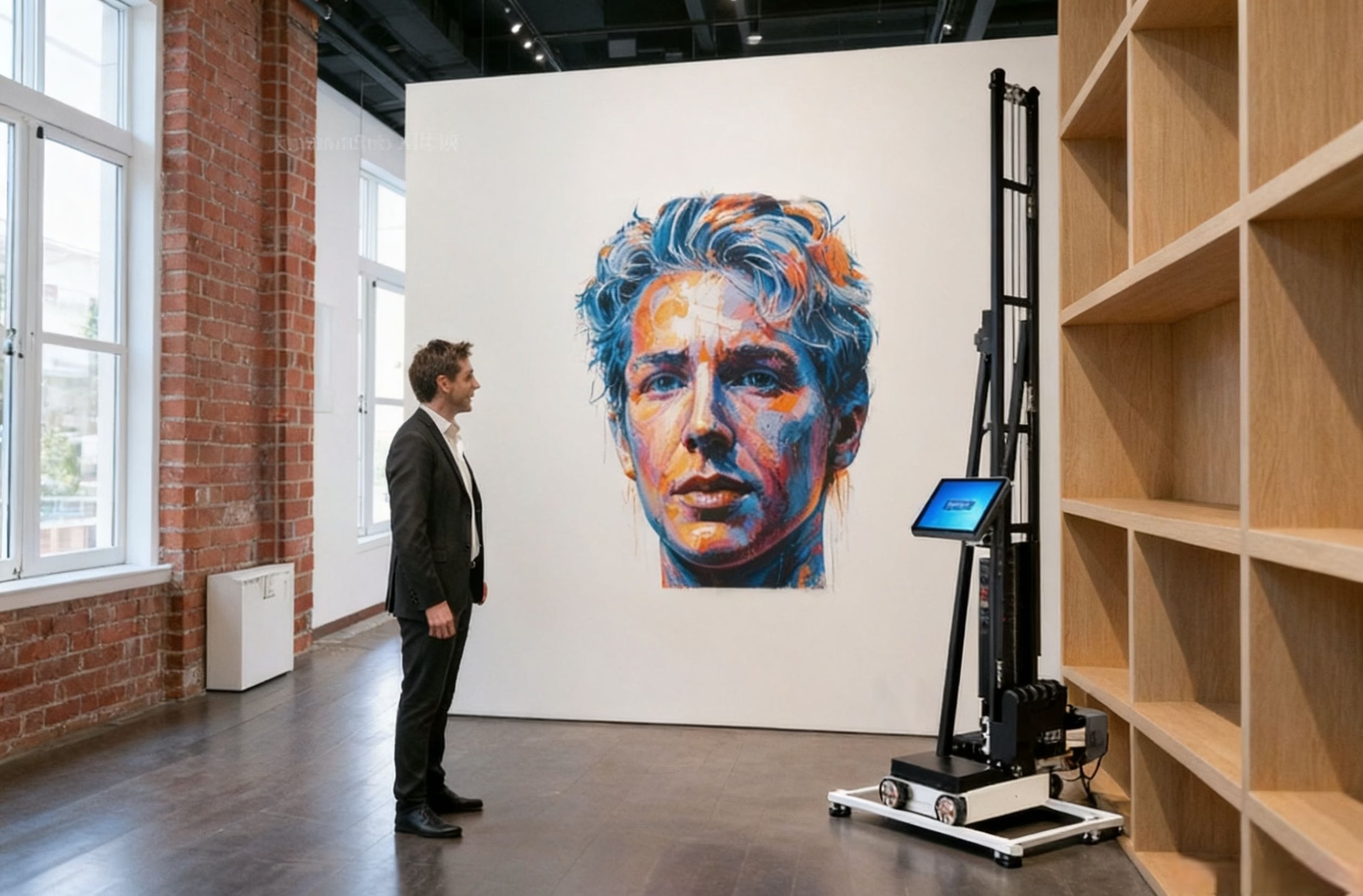
One short-term project
If you have one big mural job and you don’t plan to continue, renting avoids owning equipment you don’t use.
Testing local demand
If you are unsure whether your city has demand for wall printing, renting can be a market test—especially if you already have a sales channel (interior designers, contractors, sign shop clients).
You already have skilled operators
A wall printer is not “press button, perfect mural.” If you have experienced operators, you can reduce risk in a rental workflow. If you are new, renting can be risky if training and support are limited.
Wall Printer Rental vs Buying? When buying wins
Buying usually wins when wall printing is a real business line. Owning your wall printer machine increases capacity and predictability — which improves long-term ROI.
- You plan weekly jobsOwnership avoids day-rate stacking and scheduling conflicts.
- You need consistent outputRepeatable workflow protects quality and reputation.
- You want scheduling controlNo rental availability issues.
- You want to build brand trustStable quality and cleaner handover experience.

Leasing vs used wall printer: quick risk checklist
If you don’t want full upfront cost, leasing is common. Used machines also appear on the market. Both can work, but you must evaluate risk.
Leasing (pros/cons)
Pros: predictable monthly cost, sometimes includes service terms
Cons: you must read the service agreement carefully—what is included, what is not
Used wall printer (pros/cons)
Pros: lower upfront cost
Cons: printhead condition, missing parts, uncertain support availability, higher downtime risk
Used machine checklist
- printhead status and replacement cost
- service history
- whether spare parts are available
- whether training/support is available from someone reliable
If support is unclear, “cheap used” can become expensive because downtime is the hidden cost. Follow a proven wall-printing-workflow to reduce rework and protect margins.
ROI thinking: the volume question
The decision often becomes simple if you ask: How many jobs per month do you expect?
If you expect regular jobs, ownership generally wins. If you expect only one job every few months, rental may be more rational.
- you control your schedule
- you build a repeatable workflow
- you avoid rental day-rate stacking up
- you reduce operational uncertainty

Questions to ask before renting (don’t skip this)
- Who trains the operator?Ask for a clear first-job setup process.
- What spare parts are included?Downtime risk increases without basics.
- Who is responsible if output quality fails?Define responsibility before the job day.
- What wall surfaces are allowed?Texture limits matter for results.
- What is the expected setup time and workflow?Leveling + test patch + QC should be included.
- Is remote support available during the job?Real-time help reduces risk.
If the rental provider cannot answer these clearly, your risk is high.
Wall Printer quote checklist Send These 7 Items
- Country + city
- Typical wall height range
- Typical job size
- Main wall surfaces
- Indoor only or indoor + outdoor
- Dark walls needed?
- Power standard
CTA: Tell us your monthly volume → rent vs buy recommendation + clear quote.
Get a quote