1. What is a wall printer?
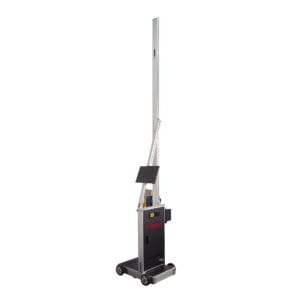
A wall printer is a machine that prints images directly onto vertical walls. People also call it a wall printing machine, wall printer machine, vertical wall printer, UV wall printer, or wall mural printer.
You may also see the term direct-to-wall printer (DTW wall printer). It means the same thing: you print the mural on-site, directly on the wall, instead of installing wallpaper panels or vinyl decals.
2. What a wall printing machine can do (real use cases)
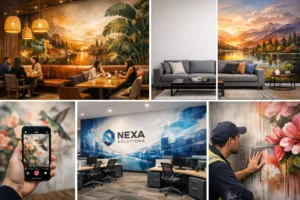
If you sell “visual impact”, a wall printer helps you deliver fast, premium-looking results. Common wall printing applications:
- Restaurant mural printing: photo zones, brand story walls, menu-themed walls
- Office wall graphics: mission and values, timeline walls, client maps
- Retail store wall murals: seasonal campaigns, immersive themes, product walls
- Hotel / gym / school walls: wayfinding graphics, motivational walls, identity walls
- Events & exhibitions: backdrops, sponsor walls, temporary partitions
3. How does a wall printer work?
A wall printer is basically a vertical UV inkjet system. You align the machine, load the design, and print while it moves along the wall.
The real workflow (step by step)
- Measure the wall (height × width) and mark safe margins
- Check the surface (dust, moisture, peeling paint, heavy texture)
- Set up and level the rail/base (leveling decides straight lines)
- Set the distance to the wall (too far = softer edges; too close = risk)
- Load the file in software (size it to real dimensions)
- Print a small test patch (color + adhesion + sharpness)
- Print the full mural (choose passes based on detail level)
- Inspect and finish (optional protection if needed)
Why UV wall printing is popular
Most wall printers use UV ink, so the ink cures fast. That helps you:
- reduce smudging
- finish jobs faster
- handle more surfaces in real projects
4. What surfaces can you print on?
You can print on many surfaces, but texture and surface stability set the limit.
Best surfaces for crisp, premium output
- Smooth painted drywall
- Sealed concrete
- Primed/sealed wood panels
- Clean tile (after degreasing)
Surfaces that work, but change the output
- Brick wall printing: possible, but fine detail will soften
- Heavy textured paint: small text and faces lose sharpness
- Dusty/chalky walls: adhesion risk unless you seal/prime
- Damp walls: high failure risk—avoid printing until fully dry
Rule you can trust: texture sets a ceiling. Even a “high resolution wall printer” cannot make deep grooves look like a flat canvas.
Material × Prep × Recommended approach (field table)
| Wall surface | What usually goes wrong | What you should do first | Design style that wins | Notes |
|---|---|---|---|---|
| Smooth painted drywall | Almost nothing (best case) | Clean + dry | Photo, gradients, fine text | Ideal for first jobs |
| Matte/chalky paint | Ink adhesion issues | Clean + prime/seal | Bold graphics, less tiny text | Do a test patch |
| Sealed concrete | Dust causes weak adhesion | Vacuum + wipe | Patterns, logos, murals | Avoid printing on powder |
| Raw concrete | Porous + uneven | Seal/prime recommended | Bold graphics | Expect less sharpness |
| Brick | Texture eats detail | Clean grooves | Big shapes, high contrast | Avoid small text |
| Tile | Oil/grease | Degrease thoroughly | Logos, simple graphics | Kitchens need extra cleaning |
| Wood | Absorption / color shift | Seal/prime | Murals, patterns | Test colors first |
| Metal / glass | Slippery surface | Prep + test adhesion | Logos, crisp art | Surface treatment matters |
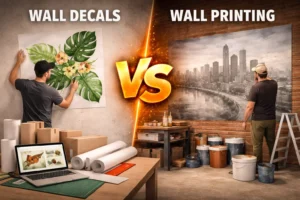
5. Wall printer vs wallpaper vs decals (quick decision)
Choose wall printing if you want seamless murals
- no panel seams
- fast on-site turnaround
- strong “wow” effect for branding
Choose custom wallpaper printing if you need removable panels
- panels can be replaced
- but seams and installation labor are real
Choose vinyl decals for small text and simple logos
- fast and affordable on smooth walls
- large murals often show seams or bubbles (especially on texture)
6. Who should buy a wall printer?
A wall printer makes sense when you print enough area that outsourcing becomes slow or expensive.
1) Wall printing business (mobile mural printing service)
If you want to start a wall printing business, you can sell murals by square meter (or by project). Your profit is controlled by:
- travel time
- setup routine
- rework rate
If you can batch jobs by area, a wall printer is easier to scale.
2) Sign shops and print shops
A wall printer is a high-ticket add-on service. You can:
- keep clients who would otherwise hire mural artists
- expand from “print” to “install + transform”
- reuse your design workflow for wall mural projects
3) Interior decorators and commercial fit-out teams
You can deliver a “one-day wall transformation” offer:
- faster than wallpaper installation
- more premium than big decals on textured walls
- strong impact for retail, offices, and hospitality
4) Multi-location brands / franchises
You can standardize store visuals across locations and refresh campaigns quickly.
7. What to check before buying a wall printer machine
A simple buyer checklist
- Your typical wall height range
- Main wall surfaces you print (drywall / brick / concrete / tile)
- Indoor only or indoor + outdoor
- Whether you need white ink for dark walls
- Training and remote support process
- Spare parts plan (downtime kills profit)
- Packed size/portability (if you travel weekly)
8. Wall Printer Quote Checklist (Send These 7 Items)
To get an accurate wall printer quote fast, you can send:
- Country + city (for shipping estimate)
- Typical wall height range (e.g., 2.5m / 3m)
- Typical job size (sqm per job + jobs per month)
- Main wall surfaces (drywall / brick / concrete / tile / wood / glass)
- Indoor only or indoor + outdoor
- Dark walls needed? (white ink workflow: yes/no)
- Power standard (voltage + plug type)
CTA: Send these 7 items and you’ll get a recommended configuration + a clear quote. ➡️ Get a Quote
FAQs:
What is a vertical wall printer?
A vertical wall printer is a wall printing machine designed to print directly on vertical surfaces (walls). It focuses on stable positioning, consistent distance, and repeatable alignment for clean edges.
How does a wall printing machine work?
You level the rail/base, set distance, load the file at real dimensions, run a test patch, then print in passes. UV curing helps the ink dry fast.
Can a wall printer print on brick walls?
Yes, brick wall printing is possible, but texture reduces fine detail. Big shapes and high contrast designs look better than tiny text.
Can a wall printer print on concrete?
Yes. For concrete wall printing, removing dust is critical. Sealed concrete usually looks better than raw porous concrete.
Can a wall printer print on dark walls?
Yes, but dark walls usually need a workflow that improves brightness (often involving a white-ink strategy). A small test patch is the fastest way to confirm.
How long does wall printing take?
Time depends on wall size, setup, and quality settings. Photo murals take longer than simple patterns. Setup and test patch time matter.
Wall printer vs wallpaper: which is better?
Choose wall printing for seamless murals and faster on-site turnaround. Choose wallpaper if you need removable panels, but expect seams and installation labor.
Do I need white ink?
You likely need white ink if you print logos/text on dark walls or want bright brand colors on uneven backgrounds. If you only print on light walls, it may be less critical.
What should I check before I buy a wall printer?
Confirm your wall height range, wall surfaces, indoor/outdoor needs, support and spare parts plan, and whether you need white ink for dark walls.