If you are researching glass wall printing, one common question is simple: can a wall printer print on glass?
The practical answer is yes. Glass wall printing is possible, especially with UV-based workflows, but it usually requires better cleaning, stronger adhesion control, and more careful testing than a standard painted wall.
That is why the real question is not only whether a wall printer can print on glass. It is whether the surface is properly prepared and whether the workflow is suitable for reliable, professional-looking results.
That said, glass is not a forgiving surface. It is smoother, less absorbent, and less tolerant of poor prep than a normal painted wall. So the real question is not only whether a wall printer can print on glass, but whether the workflow includes the right cleaning, coating, and test process before you commit to the full job. Printava’s support page also says the team can help test special surfaces in advance, which is exactly the right mindset for glass work.
Internal link :
Surface overview:
/printable-surfaces/
1. The short answer: yes, but glass needs a stricter workflow
The short answer is yes, a wall printer can print on glass. Printava’s printable-surface content and product pages repeatedly include glass as a supported material, not as an edge-case afterthought. On the UV wall printer page, the glass section specifically describes high-adhesion printing with coating, which is an important detail.
That wording matters. It tells you that glass printing is possible, but not usually with a lazy “just print and go” approach. On smoother non-porous materials, adhesion control matters more than it does on ordinary painted drywall.
This is why glass wall printing should be treated as a supported workflow, not a default workflow. It works best when the operator plans for the surface instead of treating glass like any other mural substrate.
Internal link:
Machine explainer:
/wall-printer-what-is-how-it-works/2. Why glass is harder than a normal wall
Glass looks easy because it is flat and clean-looking. In production, it is harder because it is smooth, reflective, and non-porous.
That means oils, fingerprints, residue, and cleaning chemistry matter more. Printava’s dedicated glass/tile article puts adhesion and cleaning at the center of the conversation, which is exactly where they should be for glass jobs.
On a painted wall, slight surface forgiveness is sometimes possible. On glass, poor prep is more likely to show up as weak adhesion, inconsistent appearance, or disappointing durability. That is why Printava’s support content emphasizes sample testing for special surfaces before full production.
Another difference is expectation. Buyers often assume glass should look ultra-clean and premium. That means the quality standard is usually higher, not lower. If the finish is supposed to look crisp and professional, the workflow has to reflect that from the start.
Internal link :
Support page:
/printava-wall-printer-support/
3. What makes glass wall printing work
The first factor is UV curing. Printava’s glass/tile article specifically says many wall printing workflows can print on tile and glass, especially with UV curing. That matters because fast curing helps control handling and reduces some of the messiness you would expect from slower-drying systems.
The second factor is adhesion strategy. On the UV wall printer page, Printava does not just say “glass is printable.” It says high-adhesion printing with coating, which implies that coating or primer strategy may be part of making the job reliable.
The third factor is surface preparation. Glass needs to be properly cleaned and checked before printing. Printava’s support page says the company offers sample testing for special surfaces, and that is highly relevant here because glass jobs are exactly the kind of application where a sample can save time and prevent disputes.
The fourth factor is operator discipline. Printava’s broader machine and safety content consistently frames good output as a workflow issue, not just a hardware issue. On glass, that principle becomes even more important.
Internal link :
UV product page:
/uv-wall-printer/Internal link :
Safety guide:
/wall-printer-safety/4. Where glass wall printing makes the most sense
Glass wall printing usually makes the most sense when the surface is part of a premium visual environment.
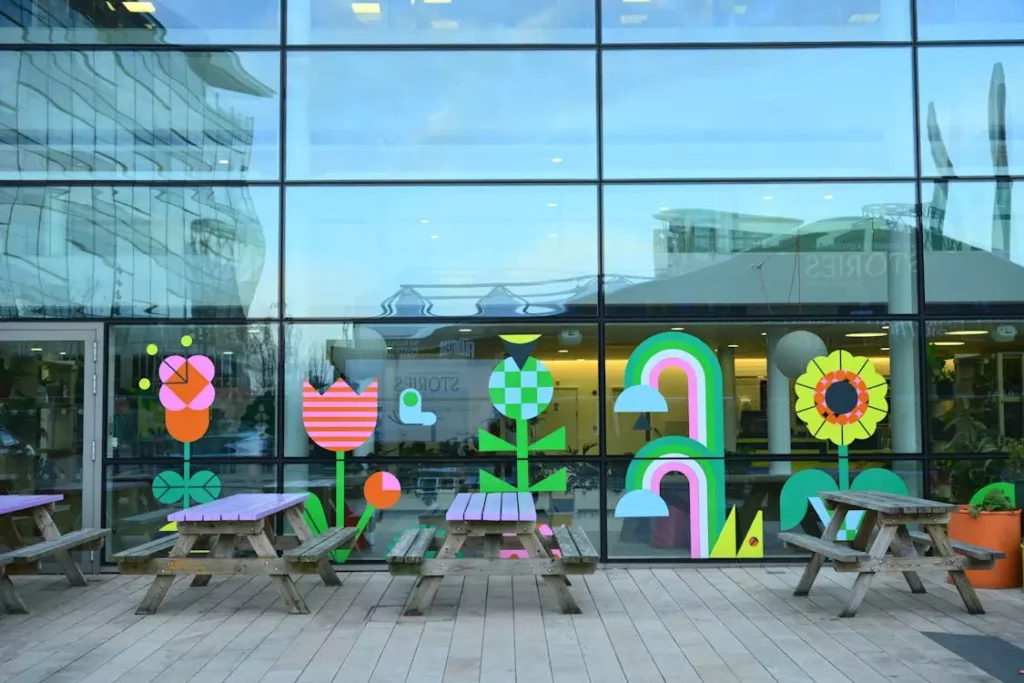
That can include glass partitions, office feature panels, showroom surfaces, exhibition spaces, branded retail areas, and decorative interior installations. Printava’s navigation and application structure consistently groups glass wall printing alongside event & exhibition graphics, brand promotion, decorative murals & interior décor, and corporate culture & office graphics, which are all practical fits for this type of surface.
It can also make sense when you want a direct-printed look rather than a separate applied graphic. In some cases, that visual effect is the whole point of choosing glass as the substrate.
What matters is not whether glass is technically printable. What matters is whether the job benefits from printing directly onto that surface, and whether the installation expectations match the real workflow.
5. What should buyers watch out for?
The biggest mistake is assuming glass behaves like a standard painted wall.
It does not. Glass usually needs better cleaning, better adhesion control, and a more careful acceptance process. Printava’s glass/tile article and support content both point in that direction by emphasizing adhesion, cleaning, and sample testing.
Another mistake is skipping the coating or primer conversation. Printava’s UV wall printer page explicitly describes glass printing as high-adhesion printing with coating, so that step should not be treated like a minor detail.
A third mistake is overselling durability without a test. On special surfaces, especially smoother non-porous ones, a test patch is not just a nice extra. It is often the fastest way to verify whether the job should go ahead exactly as planned. Printava’s support page says the team can test special surfaces in advance, which fits that logic directly.
Internal link :
Special-surface page:
/print-on-tile-and-glass/6. Glass printing vs. other options
In some projects, direct printing on glass is the right answer. In others, a different method may still be worth comparing.
Printava’s wall printer explainer explicitly notes that decals can still make sense for small text and simple logos on smooth surfaces, even though wall printing wins for seamless murals and faster on-site mural workflows. That means glass printing should be evaluated by job type, not by hype.
If the goal is a direct, premium, integrated look on a glass panel, wall printing can be a strong fit. If the goal is easy removability, frequent promotional changes, or very small simple graphics, another method may still deserve consideration.
That is why the best decision is usually workflow-based. You compare the surface, the permanence needs, the quality standard, and the risk of rework. Printava’s comparison guide is built around that kind of fit-based decision, not just feature claims.
Internal link :
Comparison guide:
/printava-wall-printer-comparison/
7. Practical answer for buyers
So, can a wall printer print on glass?
Yes. But the honest answer is: yes, when the workflow is built for glass.
That means cleaning matters more, adhesion matters more, and test discipline matters more. Printava’s own pages support that view by listing glass as a supported material while also pairing it with coating, special-surface testing, and guidance around adhesion and cleaning.
For buyers, that is actually good news. It means glass wall printing is a real application, not a fake capability claim. It just needs to be sold and executed with the right expectations.
And if you are comparing whether glass printing is worth the added workflow effort, it also helps to connect that decision to the broader machine investment question. Printava’s cost guide makes that clear by framing machine value around surfaces, workflow fit, and operating reality rather than sticker price alone.
Internal link :
Pricing guide:
/how-much-does-a-wall-printer-cost/FAQ
Can a wall printer print on glass?
Yes. Printava’s glass/tile article and surface pages both indicate that glass can be printed, especially with UV-based workflows.
Do you need coating or primer for glass wall printing?
In many cases, that is part of the workflow. Printava’s UV wall printer page specifically describes glass as high-adhesion printing with coating.
Is glass harder to print on than a painted wall?
Usually yes. Glass is smoother and less forgiving, so cleaning and adhesion control matter more.
Should you test glass before full production?
Yes. Printava’s support page says special surfaces can be tested in advance, and glass is exactly the kind of surface where that step can reduce risk.
CTA
Treat glass wall printing as a premium workflow, not a casual one. Clean the surface properly, confirm the adhesion strategy, run a test first, and route serious buyers to the right machine and support conversation.